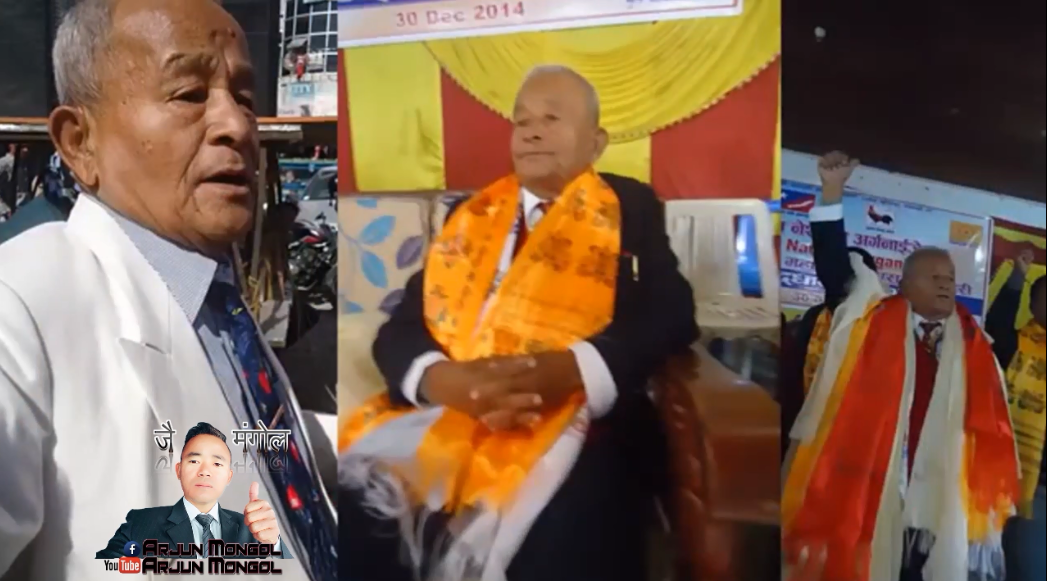
Mongol National Organization had held a press conference on 21 June 2008 in the hall of Reports's Club Nepal about eleven years ago where the Aryan reporters of Nepal were asked many questions to the founder president of MNO, Dr Gopal Gurung. In that conference reporter asked him some question like this... " If the demand of your organization couldn't full filled ,what will you do ? will you pick up the weapon ? " The Founder president of Mongol National Organization Dr Gopal Gurung had answered " weapons is the last step of revolution, if i would pick up the weapons i'd pick up on twenty first July of 2001. It is easy to pick the weapon but hard to put it down.If i'd picked up the weapon then there would be three sided war just like in China and the king Gyanendra would be the strong but my aim was to throw king and to put the president selected by the public.To pick up the weapon is not a big matter. If i wanted, it is not necessary to give training to my workers because my workers have trained in Indian Army,British Army and Nepal Army...." Do you have weapons ? " weapon is not hard to get .If someone has money he can take weapon easily.If you have money the weapon will come up to your home but we are not in the side of picking up weapons".... for more please watch the video below...
Comments
Post a Comment